
Physical Therapy
change the way you MOVE, and you change the way you FEEL !!
What is Physiotherapy?
Physiotherapy is physical therapy. Physiotherapy is a regulated health profession dedicated to improving the quality of its clients’ health with conservative physical treatment methods. Physiotherapy is a science based profession. Your Physiotherapist has specific training and education which provides them with the skills to evaluate your condition and then design and implement physical treatments with the goal of improving your condition.

What Kind of Treatment is Involved?
Physiotherapy treatment can be broken down into three different categories and your treatments will likely have components from any or all of the categories of care.
Passive treatments: These are treatments which are applied to you to effect a physical change. Treatments can include modalities (laser, ultrasound, electromagnetic current, heat, ice etc.) and/or manual techniques (joint mobilization/manipulation, soft tissue mobilization, muscle stretching/strengthening etc.)
Active treatments: These are treatments which require the patient’s participation. They are specifically designed exercises targeted at effecting a change within the musculoskeletal, neurological and/or cardiorespiratory systems as they relate to your condition.
Homework: This is the most important part of your treatment. Homework, just like in school, requires full patient participation outside of the clinic setting (and your Physiotherapist will quiz you!). You can expect to have some work to do between visits which will help progress your care. After all, you are with yourself 24/7! But don’t worry! Your Physiotherapist at Physio F/X will teach you everything you need to know as well as demonstrate proper form and technique.

What Conditions Can Physiotherapy Help?
Physiotherapy can be used to treat NUMEROUS conditions.
Problems within the musculoskeletal system (muscle sprains, tears, spasms), neurological based issues (pinched nerves and numbness in limbs), sports injuries (ruptured ligaments and tendons, sprained ankles, broken bones), repetitive strain injuries (carpal tunnel, tendonitis), Motor Vehicle Accident injuries, post surgery rehabilitation, low back pain, neck pain, slip and fall rehabilitation, orthopedic issues, pre and post natal issues, and loads more.
It is important to keep in mind that while the pain from many injuries may subside within a few days, one should still see a Physiotherapist to ensure that scar tissue depositing is minimized, flexibility and strength are not lost, and that full range of movement is maintained. The best way to prevent future complications from past injuries is to be proactive and have your Physiotherapist help you from the very start!

What does it mean to be a Physiotherapist in Ontario?
Physiotherapists are educated through accredited programs at the University level. Currently, Physiotherapists must graduate from a 4 year Bachelor Degree program before completing a 2 year Masters of Physiotherapy degree.
Newly graduated and foreign trained Physiotherapy candidates must pass a credentialing examination process; this process requires completion of written and practical examinations in addition to a board review of academic credentials.
Continued registration with the College of Physiotherapists of Ontario requires that each licensed Physiotherapist participate in continuing education to maintain the quality and standards of practice of their profession.
Benefits
There are a thousand-and-one benefits to Physiotherapy!
If you suffer from a specific injury or localized pain, Physiotherapy can offer pain relief, solutions to the underlying problem, and in most cases complete rehabilitation. The knowledge your Physiotherapist possesses will allow them to develop a treatment plan specifically designed for you. They may work with a hands-on approach to mobilize joints, to ease muscle tension, to improve range of movement, etc. They may use a modality, like Laser, Ultrasound, or Interferrential current, to stimulate the injured tissues and promote healing within these areas. They may show you some new stretches and exercises that you can do in our gym and/or at home to promote strengthening and improve posture. Most likely though you will have a combination of all of the tools Physiotherapy has to offer incorporated into your treatment plan. Physiotherapy will get you back into that sport, back to work, or back to the gym. In short, back to your normal life!
Physiotherapy doesn’t have to be just for injuries. Physiotherapists can provide tips, advice, stretches, work out plans, etc for any number of different activities and individuals at all stages of life. Come talk to our Physiotherapists if you aren’t suffering from an injury but would like to:
- develop a proper weight training program
- rejuvenate an old workout plan
- start a new cardio routine
- start a new sport
- train for an event (marathon, mountain climb)
- relieve pre-natal or post-natal bodily stress
- develop better posture
Physiotherapy FAQs
1. When Do I Need to See a Physiotherapist?
The answer is simple.
a) If you have pain somewhere that you have questions about. You may or may not have seen your family doctor regarding an ache or pain that is affecting your ability to function at your best. A Physiotherapist has specific skills to evaluate, advise, and /or treat many types of conditions.
b) If you need advice about fitness or exercise. Whether you are just starting an exercise program, beginning to change to a more active lifestyle or you are a seasoned exercise enthusiast, your Physiotherapist can answer any of your questions.
2. How Can I Prevent Injuries When I Exercise?
The best way to prevent injuries is to show up early and be prepared. A good piece of life advice too. If you arrive to exercise early, you have enough time to “warm up” your body and stretch before you place the heavier demands of the activity on your muscles and joints. These rules apply to vigorous sports/exercises and recreational activities such as gardening, walking and shoveling, painting and renovating around the house, and “housework”.
3. What is an RSI?
RSI is an acronym for Repetitive Strain Injury. This phrase is presently “in vogue” in the rehabilitation community. It is a loose categorization of injuries which are believed to originate from repetitious movements, usually in the upper extremities.
A Physiotherapist will conduct an assessment of your condition(s) and provide a plan of treatment, prevention, and education regarding your RSI. For more information on RSI’s you can visit the Canadian Physiotherapy Association.
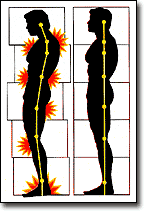
4. What is the Big Deal About Posture?
Posture is the alignment of your body and describes the balance and/or imbalance that exists in the muscles, ligaments, connective tissues, and skeletal structures. Postural positioning will affect the amount of strength, tension, and efficiency of the musculoskeletal system. Postural syndromes can cause ineffective and/or inefficient use of muscle groups, and eventually skeletal structures, in the body which can lead to injury and discomfort.
5. But Isn’t My Posture Inherited?
NO!!! Although there are certain genetic conditions which can negatively affect your posture, for the most part, your posture is “learned”. You will adapt certain elements of your posture from the sustained positions you develop at work/school (which is work too); part of your postural character will be influenced by your hobbies/ activities; the people who surround you will also have a strong impact on the postures you choose. Therefore, in the majority of us, our posture is often a physical accumulation of characteristics and physical stresses and strains that we have chosen as a part of our lifestyle.
6. What is S.M.A.R.T?
You are, because you have chosen to do something proactive for your health! S.M.A.R.T. is an acronym we are using in the Physiotherapy circles to help promote active lifestyle changes. It stands for Stretch, Move, Add it up, Reduce strain, Talk to a Physiotherapist. These are the key ingredients to making the changes to a more active and healthy lifestyle.
An active and healthy lifestyle is accompanied by mobility. When you move well you feel well and Physiotherapy is dedicated to the restoration and/or enhancement of mobility and functionality. For more information on S.M.A.R.T, visit the Canadian Physiotherapy Association web site.
7. What is Your Clinic Like?
Our clinic is a large, (2500 sq.ft) friendly, multidisciplinary space with a full gym area filled with specifically designed rehabilitation exercise equipment, 1 private Physiotherapy treatment room, 2 dedicated massage therapy offices, 2 Chiropractic offices with specialized tables, and 1 Naturopathic office. The gym space is filled with natural light, as we have wall-to-wall windows overlooking the busy Scarborough Town Centre hub. Our clinic is fully equipped with all the necessary treatment modalities such as Therapeutic Laser, Therapeutic Ultrasound, Interferrential current machines, TENS (Transcutaneous Electrical Nerve Stimulation) unit and Muscle stimulator unit along with Theraband equipment, stability balls, free weights, and cardio equipment. Take a peek by clicking here!
8. What is Ultrasound and Why is it Beneficial?
Ultrasound in physiotherapy is a treatment that uses sound waves to penetrate deep into the tissues. These sound waves help increase blood flow, reduce inflammation, and promote tissue healing. It’s commonly used to treat soft tissue injuries, muscle strains, tendonitis, and joint pain.
The benefits of ultrasound therapy include faster healing, reduced pain, improved tissue relaxation, and decreased muscle spasms. It’s a non-invasive treatment that can be a helpful part of your rehabilitation plan to support your recovery
9. What should I expect during my first appointment?
Your first visit will involve an initial assessment to understand your condition and plan your treatment. The Physiotherapist will evaluate your strength, flexibility, gait, reflexes, and more. They may also use palpation techniques to assess the injured or affected area. This assessment typically lasts about 60 minutes. Feel free to ask any questions throughout the session. Afterward, the Physiotherapist will explain the diagnosis and recommend a treatment plan, including how often you’ll need to attend and what to expect during your recovery.
10. What should I wear to my appointments?
It’s best to wear loose, comfortable clothing that allows easy movement and provides access to the area being treated. For example, tank tops and short sleeves work well for upper body treatments, while regular-length shorts are ideal for lower body issues. Avoid restrictive clothing like skirts, dresses, or very short shorts. If you’re coming straight from work or another activity, we recommend planning ahead to bring appropriate attire.
11. Will my physiotherapy session be painful?
Physiotherapy is generally designed to relieve pain and promote healing, but some treatments may cause mild discomfort, especially if you’re recovering from an injury or working on stiff or tight muscles. Your physiotherapist will tailor the treatment to your comfort level and adjust techniques if anything becomes painful. It’s important to communicate openly with your therapist about how you feel during the session so they can modify the approach if needed. The goal is to help you recover, not cause unnecessary pain.
12. How many sessions will I needs?
The number of physiotherapy sessions you’ll need depends on your specific condition, the severity of the injury, and your individual response to treatment. Some people may feel improvement after just a few sessions, while others with more complex or long-term issues might require ongoing therapy over several weeks or months. After your initial assessment, our physiotherapist will provide a personalized treatment plan, including a recommended number of sessions, to help you reach your recovery goals.
13. How long will each session last?
- The length of each session can vary depending on the condition being treated. Most physiotherapy sessions range from 30 minutes to an hour. More complex conditions may require longer sessions or a longer course of treatment. Soft tissue recovery, for instance, may take 6 to 8 weeks, but this depends on the nature and severity of the injury.
14. Do I need a doctor’s referral?
- No, you don’t need a doctor’s referral to see a Physiotherapist in Canada. Physiotherapists are primary health care providers, so you can book an appointment directly. However, if you have extended health benefits, your insurance provider may require a doctor’s referral for coverage. Physiotherapists are qualified to assess and diagnose various conditions, including musculoskeletal injuries, neurological disorders, and cardiorespiratory issues. Based on your specific goals and the physiotherapist’s assessment, a personalized treatment plan will be created.
15. Do you offer virtual physiotherapy sessions?
No, we do not offer virtual physiotherapy sessions. If you have more question regarding this or phone consultations, please contact us and we would be happy to discuss alternative treatment options.
16. What should I bring with me to my first sessions?
Prior to your first visit, we will need to collect some information about you and your prior health history. It is important to have knowledge of or access to the following information for your first appointment:
- Referral or prescription: If you have a referral from your doctor or any relevant medical documents, please bring them along.
- Insurance Information: If you plan to use insurance, bring your insurance card or any relevant details.
- Comfortable Clothing: Wear loose-fitting clothes that allow for easy movement and access to the area being treated. For example, if you have knee pain, shorts may be more appropriate.
- List of Medication: Bring a list of any medications you’re currently taking, including dosages.
- Medical History: Be prepared to discuss your medical history, previous injuries, surgeries, or treatments related to your current condition.
- Questions or Concerns: If you have any specific questions or concerns about your treatment, jot them down to discuss with your physiotherapist.